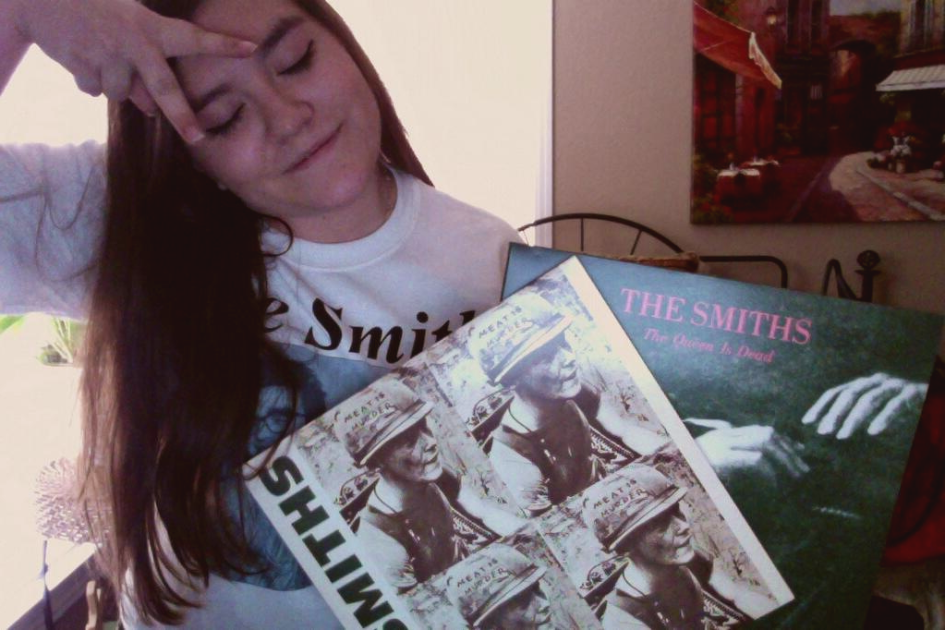
meat is murder
before seeing morrissey live for the first time, i had a thought i knew was completely ridiculous: i didn’t want him to smell meat on me.
there’s a song called meat is murder off the equally named 1985 album. i listened to it enough times that it eventually started to stick. the loud chainsaws, crying cows, and eerie pleadings from the song echoed in my mind each time i ate meat. one afternoon i ate mcdonald’s chicken nuggets, got sick, didn’t eat for eighteen hours, and that was it. i stopped eating all meat. chicken and turkey crept back eventually, but red meat never did.
that’s what a band can do to you at an impressionable age.
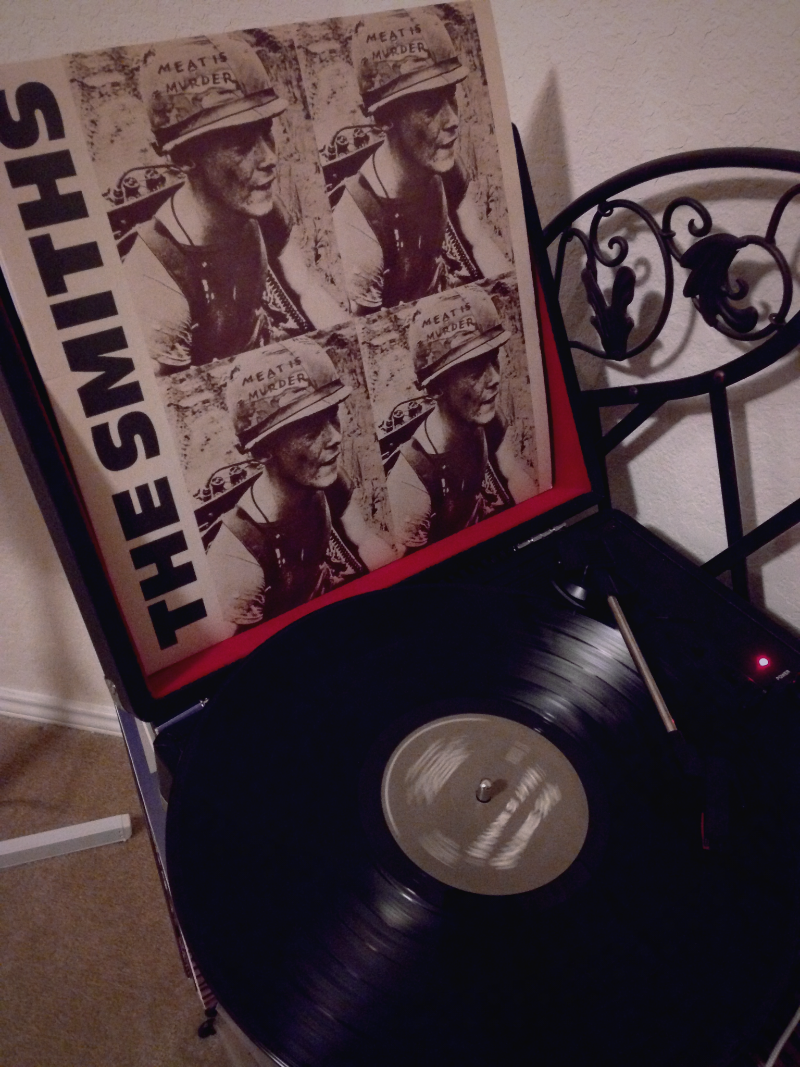
i became a casual smiths fan in florida, catching them on pandora radios, recognizing something without quite knowing what. then, i moved to san antonio going into sophomore year of high school and something shifted. by the time i arrived, it wasn’t casual anymore. i was reading every memoir written about them, watching every documentary, and playing the albums until the sequencing felt like a second language. i eventually made some of my closest friends in san antonio. they’re still in my life today - the smiths got there first though, filling the space before any of them existed in my world.
what i didn’t know then: one of their songs had already written the rest of the story.
rubber ring
rubber ring (listen on amazon music) is not one of the smiths’ most famous songs. on spotify it has 18 million streams. their most popular song, there is a light that never goes out, has over a billion. on any given day, rubber ring accounts for 0.2% of all smiths streams. their most played song gets 76x more plays.
the song about being forgotten has, largely, been forgotten.
that’s exactly what the song is about. it’s written from the perspective of a song that used to mean a lot to you, speaking directly to the listener who loved it once and moved on, asking “do you love me like you used to?” it knows the answer. it just begs to ask.
morrissey opens with this:
“a sad fact widely known / the most impassionate song to a lonely soul / is so easily outgrown / but don’t forget the songs that made you smile / and the songs that made you cry”
the title itself carries two meanings. a rubber ring is both a vinyl record - round, made of rubber - and a flotation device, the thing you grab when you’re drowning. morrissey is saying: i was that. i kept you afloat during whatever era you sonically invited me in. you don’t need me anymore, and i knew you wouldn’t, but i want you to remember what i did before you forget entirely.
“the songs that saved your life.” not the songs you liked, not the songs you had on in the background. the songs that were there for you when you seemingly had nothing else.
the passing of time
it sounds dramatic until you think about what it actually means to be 15 and new somewhere, putting on an album that sounds like someone truly understands you. the songs weren’t background - they were doing something specific, for a specific version of you that was still forming, during a window that would undoubtedly close.
rubber ring knows this. it knows its own function, and it knows you’ll outgrow the obsession. not because anything went wrong - just because that’s what happens in life. you find your people, you figure out who you are, and the grip of an obsession loosens. the song isn’t bitter about it either, it just wants credit. “i’m here with the cause, i’m holding the torch in the corner of your room, can you hear me?” it pleads, long after you’ve stopped looking in that direction.
even at peak obsession, i knew it wouldn’t last. growing up as a military brat, you become adept at recognizing the shape of an era while you’re still inside of it. places don’t stay, phases don’t, versions of yourself don’t either. when i found rubber ring, it felt less like a discovery and more like a message from my own future - confirming something i already suspected. the song had seen this coming before i had.
i went back to eating chicken in college. i listen to the smiths less. morrissey became harder to separate from his later years, and the obsession cooled into something more calm. a respect. a memory of a version of myself who needed them in a way i no longer do. the friends from san antonio are still in my orbit. the albums are still in my library.
rubber ring is still in the corner of my room.
seasons of your life
i’ve been thinking about this a lot because of what i built.
growing up moving city to city, i couldn’t anchor my identity to a place. what stayed constant was the music. specific artists tied to specific moves, artists tied to transitions, songs to the exact weeks when everything felt uncertain and unfinished. i always wanted to see those eras laid out. not in playlists or year-end summaries, but the actual shape of it - what i was listening to obsessively during each period, which artists showed up for which version of me, and what the pattern said about who i was becoming.
that’s why i created seasons of your life, because these phases are just seasons, and the songs that fill them shape you in ways you won’t fully understand until you look back.
rubber ring understood this in 1985, before any of us had a way to look back and see the pattern. the songs that carry you through something don’t stay loud forever. they embed themselves in your history.
somewhere in your listening history, there’s a timestamp that proves it.
“do you love me like you used to?”
probably not. the obsession passed, and that’s exactly what rubber ring predicted. the songs that carry you through something aren’t meant to stay forever - they’re meant to get you somewhere. yours already did.
seasons of your life maps your spotify and apple music streaming history to the eras that actually shaped you. seasons.moonpath.dev
rubber ring written by morrissey and johnny marr, released 1985. all photos by aleyiah peña, 2013/2014.